

How NFCB is Redefining Community Radio as Essential Civic Infrastructure
The Challenge: A Crisis of Infrastructure
For nearly six decades the Corporation for Public Broadcasting supported a system of educational, cultural and public interest news and programming around the US. But in 2025, after years of politicized attacks, CPB was defunded by Congress.
For the National Federation of Community Broadcasters (NFCB), an organization championing the needs of small, rural, BIPOC, and Tribal communities, this crisis meant the loss of essential lifelines. Many of these stations operate with only volunteers or reduced teams, yet they are the only sources communities can rely on for safety, civic participation, and culturally competent information. NFCB needed a powerful way to articulate to funders and policymakers why saving these stations meant saving the civic health of entire regions.
“For NFCB, the Civic Information Index is more than a dataset. It is a lifeline, a grounding tool, and a catalyst for renewed clarity in our advocacy.” — Rima Dael, CEO of NFCB
The Solution: Validating Lived Experience with Hard Data
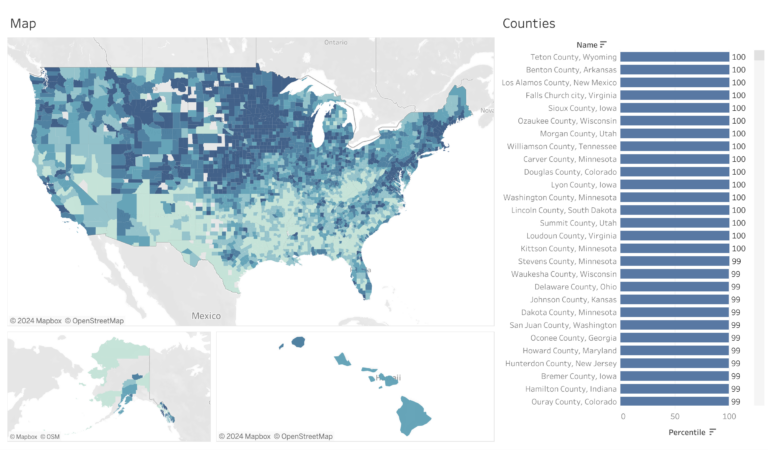
NFCB used the Civic Information Index as a diagnostic tool to evaluate which regions of the country offered the strongest opportunity to build civic infrastructure for news and information. The Index allowed NFCB to see their stations in the context of real community conditions, such as lack of broadband access, medical debt, high unemployment and language-access barriers. For the first time, they could clearly see the overlap between where their stations operate and where communities face the greatest challenges.
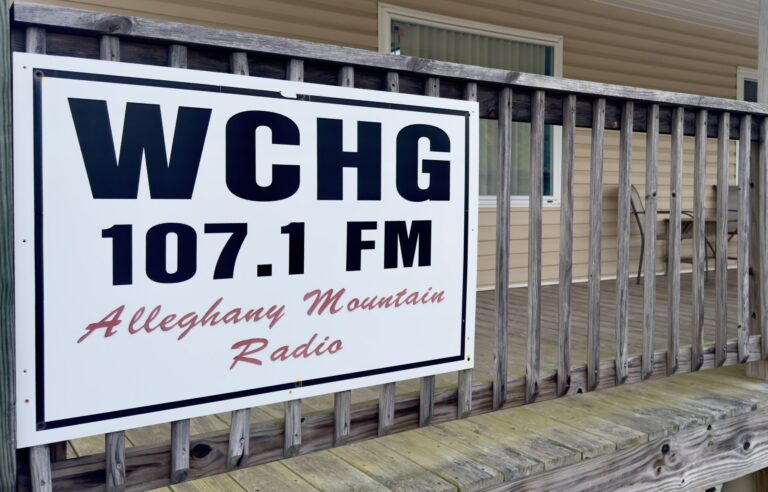
This evaluation led to the strategic selection of NFCB’s inaugural partnership cohort, collaborating with the Listening Post Collective and their Civic Media Playbook: KKCR, KWSO, Allegheny Mountain Radio, KUYI, and WMMT. This also marked the first time the Listening Post Collective (LPC) used a cohort model to onboard local partners together.
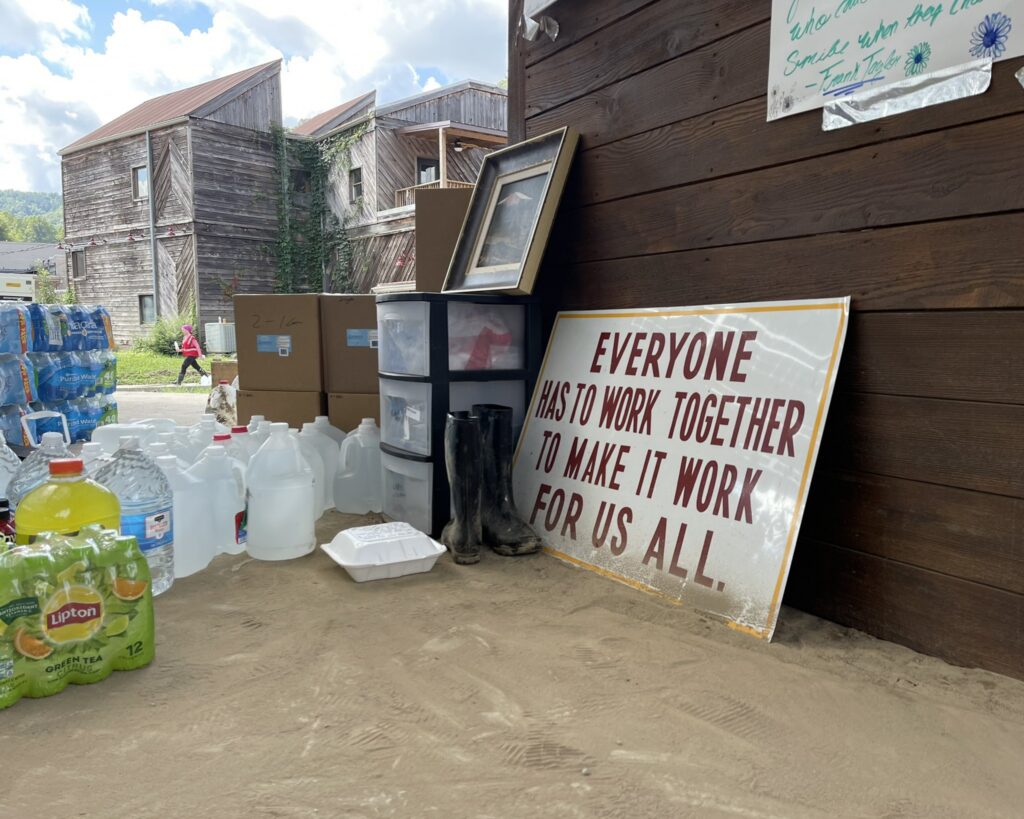
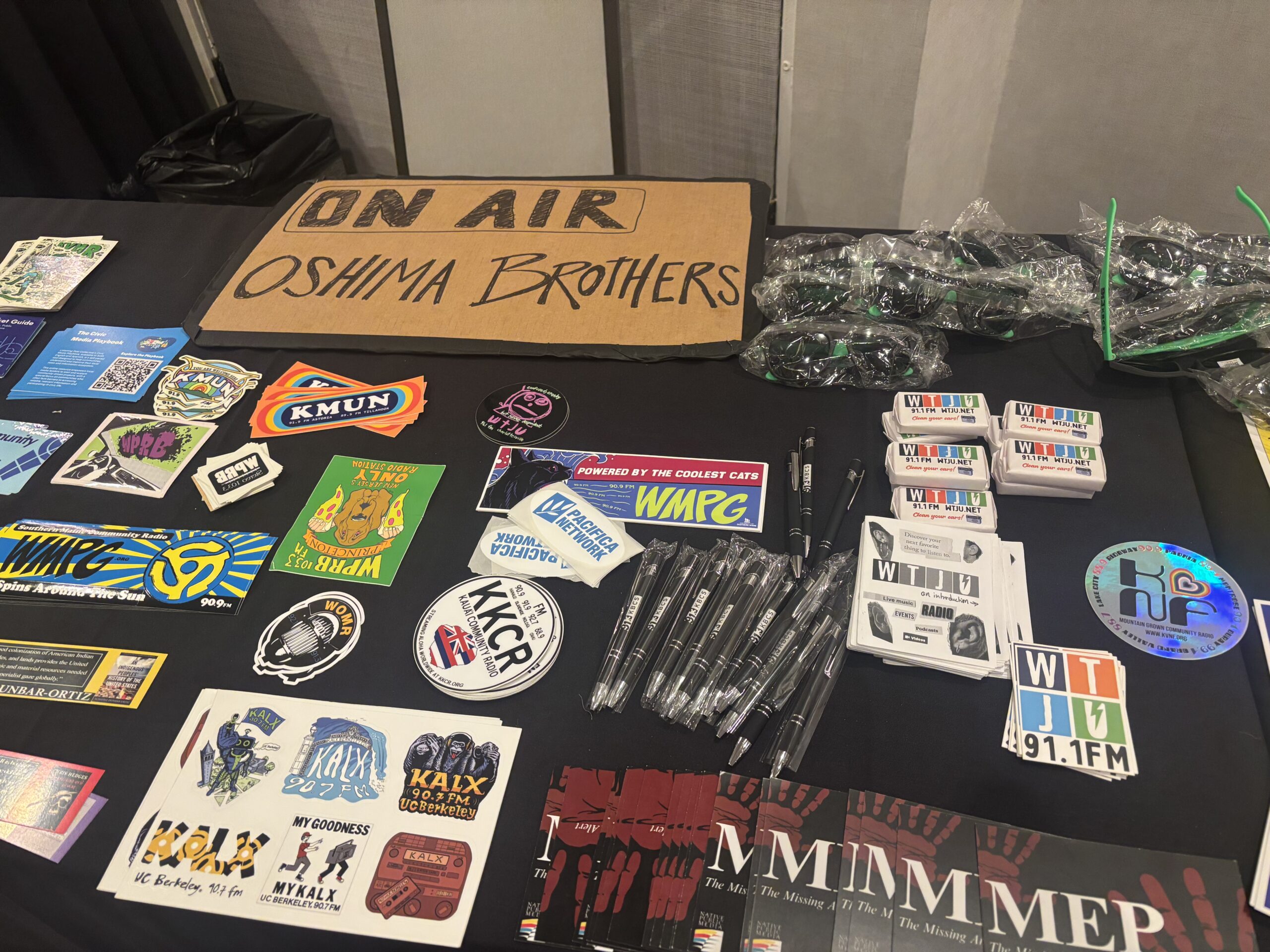
Photo by Roger May, WMMT
Shifting the Narrative: Reframing the public argument from “saving journalism” to civic health
NFCB was able to shift conversations from anecdotes to data-driven, community-specific insights about where risks and opportunities lie at the intersection of local media and civic health. They stopped arguing simply to save legacy broadcasting systems and started advocating for community resilience and public safety.
Rima brought this evidence directly to the halls of government. Throughout the 2025 advocacy efforts with Congress, she repeatedly referenced the Index’s findings to showcase the urgent need to keep the CPB alive from a public safety perspective and highlighted the need for strong civic media infrastructure in rural communities, which represent 63% of NFCB’s membership.
The Index also sharpened another critical point for public debate: more media outlets doesn’t inherently mean better civic health. As NFCB CEO Rima Dael noted, representation, access, and trust can matter more than volume, especially in the very places most vulnerable to information gaps.
“Instead of fighting only for institutions, we fought for people, for civic health, for resilience, and for the ability of rural and marginalized communities to access the information they need to survive and thrive.” — Rima Dael, CEO of NFCB
What NFCB is doing next with the Index
NFCB describes the Civic Information Index as central to their strategy moving forward, useful both as a shared narrative tool and as a planning tool. As NFCB launches a Rural Research Study in 2026, the Index will serve as a baseline data source and reference point for understanding complex civic, social, and informational realities of rural, Tribal, and BIPOC communities.
The Index also served as important research alongside the Reaching Unmet Needs (RUN) Survey, helping to contextualize broader conversations about what communities need and where local community radio and public media organizations can provide better news and information.
They also note the Index’s importance as a public resource in moments when data transparency can’t be assumed, calling it “a rare level of county-level insight.”
Why It Matters: A Tool for the Future
At a time when national and local governmental transparency is waning, the Index’s insights have become essential to NFCB’s long-term vision. At the recent News Futures convening, Rima asked stakeholders to use the Index to inform how they talk about communities and referenced the Index as a grounding tool to move the conversation beyond fragmented data points toward a more holistic understanding of civic health.
For an organization on the front lines of the local information crisis, the Index reveals whether a community is fundamentally strong or increasingly fragile. It surfaces the often-invisible structural conditions that make community radio necessary, and, in her words, it has become “a lifeline, a grounding tool, and a catalyst for renewed clarity in our advocacy.”
Ultimately, NFCB frames the Index as the “first floor” of something better, giving organizations not only evidence, but language to defend the role they already play in helping communities stay informed, connected, and resilient by naming disparities, tracking change, and advocating with precision.