
Tackling low voter turnout with the Evansville NewsLab
The Evansville NewsLab (ENL) is a civic journalism initiative in Evansville, Indiana using community research to fill gaps in local news. With support from the University of Evansville’s ChangeLab, and through a locally-focused news assessment funded by the Listening Post Collective, the ENL team conducted surveys and listening sessions to learn about what kinds of information and reporting residents in Evansville need. We sat down with the lab’s co-founder, Steve Burger, to learn more about their findings and how the Civic Information Index helped spur one of their recent projects.
Cross-referencing voter data
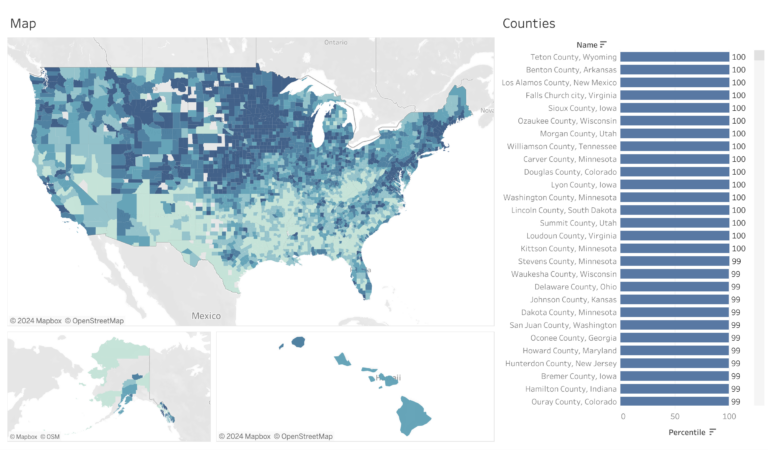
When ENL’s team cross-referenced data from the Civic Information Index with findings from their own local news assessment, one issue stood out: low voter turnout. Indiana, in fact, has one of the lowest voter turnouts in the country. Recent data suggests that this trend is mirrored locally too, with Vanderburgh County, where Evansville sits, reaching a turnout of only 55% in the 2024 election.
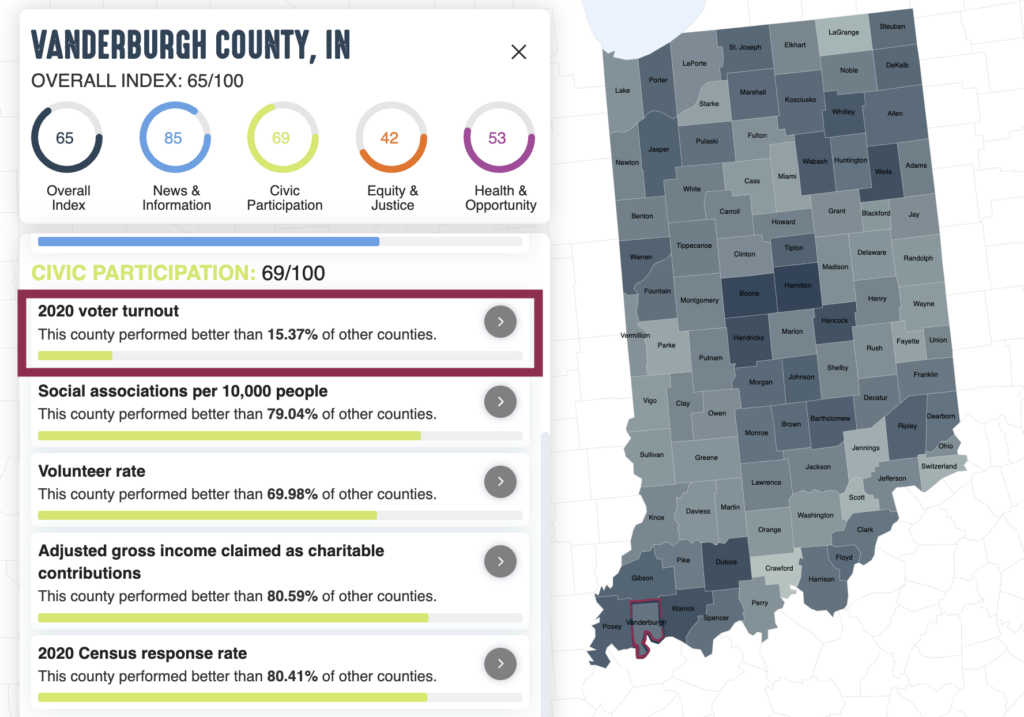
These findings sparked a new idea. Raising voter turnout, Burger said, was a clear mandate that could help shape their reporting and a concrete way ENL could build up civic engagement in Evansville. The team is now running an active, multifaceted campaign, beginning with the 2026 Indiana primary and specifically targeting down ballot races. Through a partnership with Ballot Ready, an organization that builds tools for voters to help them make more informed decisions on their ballots, ENL and students at the University of Evansville are working on a customized plugin for Gen Z voters that provides election and voting information.
ENL is also partnering with the Immigrant Welcome and Resource Center to better reach Latino, Haitian Creole, and Marshallese residents, as well as the League of Women Voters and local Black-owned newspaper, Our Times. Their plan? Create more voter and civic information on the social media platforms people actually use and see day-to-day.
Defending local research in small market
Cross-referencing local data with the Civic Index also helped the ENL team validate some of their core strategies. For example, data from the Index shows that Vanderburgh County has nearly 24,000 library visits for every 10,000 residents — that’s a higher ratio than 75% of other counties in the U.S. “We have a strong partnership with the local library system which provides space for our listening sessions and civic journalism training,” Burger said. “They are enthusiastic partners, and the [library visits] indicator shows that they can be an effective partner as well.”

Steve Burger also noted that local data alone can often be met with cynicism from potential funders and local stakeholders. In a smaller market, where resources are scarce and local philanthropic support often requires rigorous external validation, the data they collect from their community surveys and listening sessions only fights half the battle. This is where the Index comes in: it helps prove that their local findings are not just anecdotal, but part of a measurable, national trend, giving them what Burger called their “best assurance and our best defense.”