

How Community Broadcasters Use the Index
By A. Rima Dael, CEO, National Federation of Community Broadcasters
Over the past several years, the work of the National Federation of Community Broadcasters (NFCB) has centered on a clear focus: how do we strengthen community radio not simply as a network of stations, but as essential civic infrastructure? As the public media landscape has shifted and long-standing support has eroded, this question has taken on new urgency.
For the small, rural, Tribal, BIPOC-serving, and multilingual stations that are the heart of our membership, the stakes are real. Many operate with limited budgets and small or volunteer teams. Yet they remain among the most trusted sources of information and cultural companions in their communities, showing up every day as steady, local institutions that people rely on to stay informed, connected, and safe.
Design note: this could be pulled as a quote in the left column of the foreword layout.
For NFCB, the Civic Information Index is not an abstract dataset. It is a working tool.
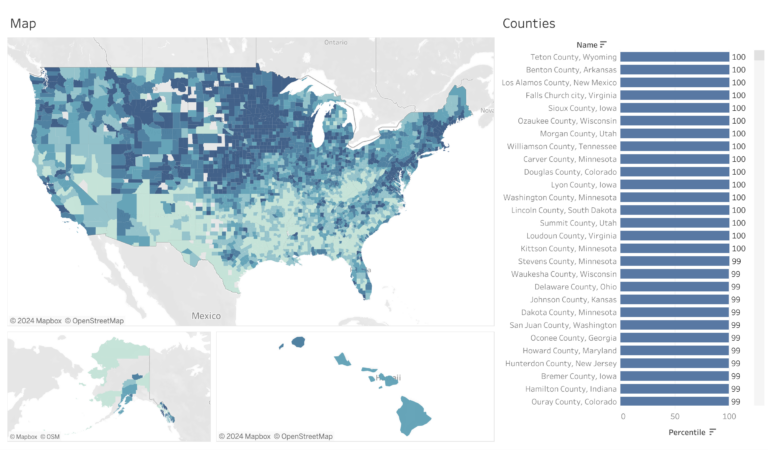
The Index allows us to see our stations in the full context of the communities they serve through five interconnected pillars: News and Information; Civic Participation Ecosystem; Equity and Justice; Health and Opportunity; and Environmental Resilience. Together, these pillars reflect the conditions that shape whether communities can access information, participate in civic life, and respond to challenges. The Index makes these relationships visible. It surfaces structural realities, from broadband access and news deserts to medical debt, housing stability, and environmental vulnerability.
The Index also affirms what our stations have long understood through practice: community radio is often strongest in places where other forms of civic infrastructure are limited or absent. In these communities, multilingual access is not an add-on. It is fundamental to whether people can participate, respond, and stay connected.
This clarity has shaped both our strategy and our partnership with the Listening Post Collective and the Information Futures Lab. NFCB used the Index to guide unique investments in member stations in Appalachia and Tribal communities, helping them listen to their communities and evolve their work to target topics, platforms, and realities that shape information in their regions.
The Index has also strengthened how we show up in advocacy.
It allows us to move beyond anecdotes and speak with greater precision about civic health, public safety, and the conditions communities are navigating every day. It gives us a way to connect what we see on the ground to broader systems, policy conversations, and investment decisions.
Looking ahead, the Civic Information Index will remain central to NFCB’s work.
The Index informs how we plan, how we invest our time and resources, and how we support stations as part of broader civic systems.
It is part of the infrastructure we rely on to do this work well. We invite you to engage deeply with this data and use it to inform decisions, guide investment, and strengthen the civic life of your communities.