

Launching the 2026 Index in a changed America
As we share the 2026 edition of the Index, we are finding ourselves in a changed America.
Across the country, a landmark bill passed by congress in July 2025 (H.R.1) is breaking down the social support infrastructure that many communities rely on, like Medicaid and SNAP food benefits. Critical elements of civic infrastructure have been defunded, from federal agencies to health and climate data projects to civil rights protection programs to local organizations supporting people in need. From Oregon to Rhode Island, from Minnesota to Texas, a brute-force immigration crackdown has brought disruption, fear, and instability to American communities.
As the very narrative of the U.S. as a constitutional democracy and nation of immigrants is at stake, these adversities have also galvanized new coalitions and resistance against democratic backsliding. More people are organizing for civic action, participation, and a vision of the nation that prioritizes civic health for all. And people are reshaping information infrastructure in the process, for example by leaning in to existing or creating new, relationship-based information networks to support immigrants in need of safety, supplies, and care.
Connecting local civic needs with information needs
In local communities, people are looking for ways to survive and thrive amidst these shifts. They need their local information ecosystems, everyone from journalists to libraries to public information sources to local leaders, to provide trusted information rooted in the civic issues that impact them most. They need information that can connect them to timely resources, make sense of the systems around them, provide opportunities for connection and belonging, and empower them to take action and make decisions that promote individual — and collective — wellbeing.
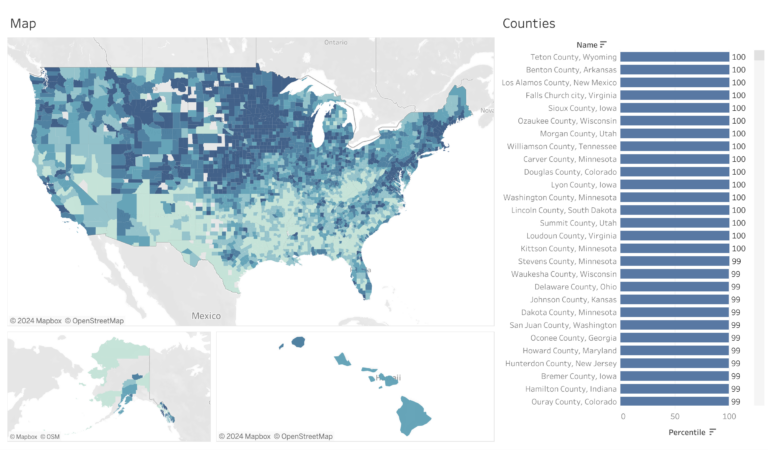
The Civic Information Index was designed to make these connections between local civic needs and local information needs visible and actionable. Users can check how every single county in the United States is doing when it comes to essentials such as safety, housing, education, employment, and civic engagement. Users can map key elements of their local information ecosystem beyond journalism and newsrooms.
“Place is an asset for interrupting nationalized trends and finding local solutions. The Civic Information Index helps you contextualize place and makes the drivers of civic health visible and measurable at the county-level across the U.S.” Lizzy Hazeltine,
Documenting the impact of disruption
Tracking this civic data has never been more important. The ongoing dismantling of safety net policies is expected to push millions into food and housing insecurity, medical debt, and poverty — with impacts accelerating through 2026 and beyond. Future updates of the Index will make such impacts visible, for each data point and across different factors, documenting the consequences of the current upheaval for the civic health of American communities.
That is, if credible data collection is maintained. Twenty-two of the 27 data sets in the Index are based on federal-government-supported research and data collection efforts. As the federal government continues to defund federal agencies and overhaul the U.S. Census, it is unclear what the impact of these actions will be on the availability of this critical data in the coming years.
Protecting data collection
Some of the data points in the 2026 Civic Information Index provide powerful examples for why all of this matters. Amidst a backlash against the crippling effects of medical debt on people who can’t pay for the care of diseases they didn’t cause, and resulting changes in hospital practices and local and state laws, medical debt has gone down across the country – with a few exceptions, especially in Alaska. And when medical debt goes down, civic health goes up. We know this because the Urban Institute is collecting the medical debt data, and we are able to connect it to other indicators in the Index.
“We are at a critical moment, both for how we think about measuring civic health, and for understanding what risks we face if we stop paying attention to it.” Cameron Hickey, CEO, National Conference on Citizenship
In this context, then, the Civic Information Index is also becoming a key showcase for the crucial role of data itself as a driver of civic health. Consistent data collection can make civic backsliding visible, and provides powerful evidence for advocacy. Which communities are confronting challenges? Who is thriving? Who is struggling? Sustaining data that help answer such questions will require collective efforts to advocate for data collection to remain a priority and for the data sets to remain publicly accessible. It also requires creativity in how local and regional efforts can play a bigger role in collecting and sharing public data in the absence of reliable federal government efforts.
Looking beyond divisive narratives
Finally, the Civic Information Index also leads us past misleading narratives about a divided America. By relying on cross-sector, community-level data rather than generalizations, we can see the more nuanced realities of communities around the country in this complicated time. Every community deserves to be considered based on what’s actually happening on the ground, and the efforts civic institutions and individuals make to improve the lives of their neighbors every day. The breadth and depth of the Index’s community-based data begins to make this possible.