Beyond Headlines: How a University of Oregon Class is Using Index Data to Redefine Journalism
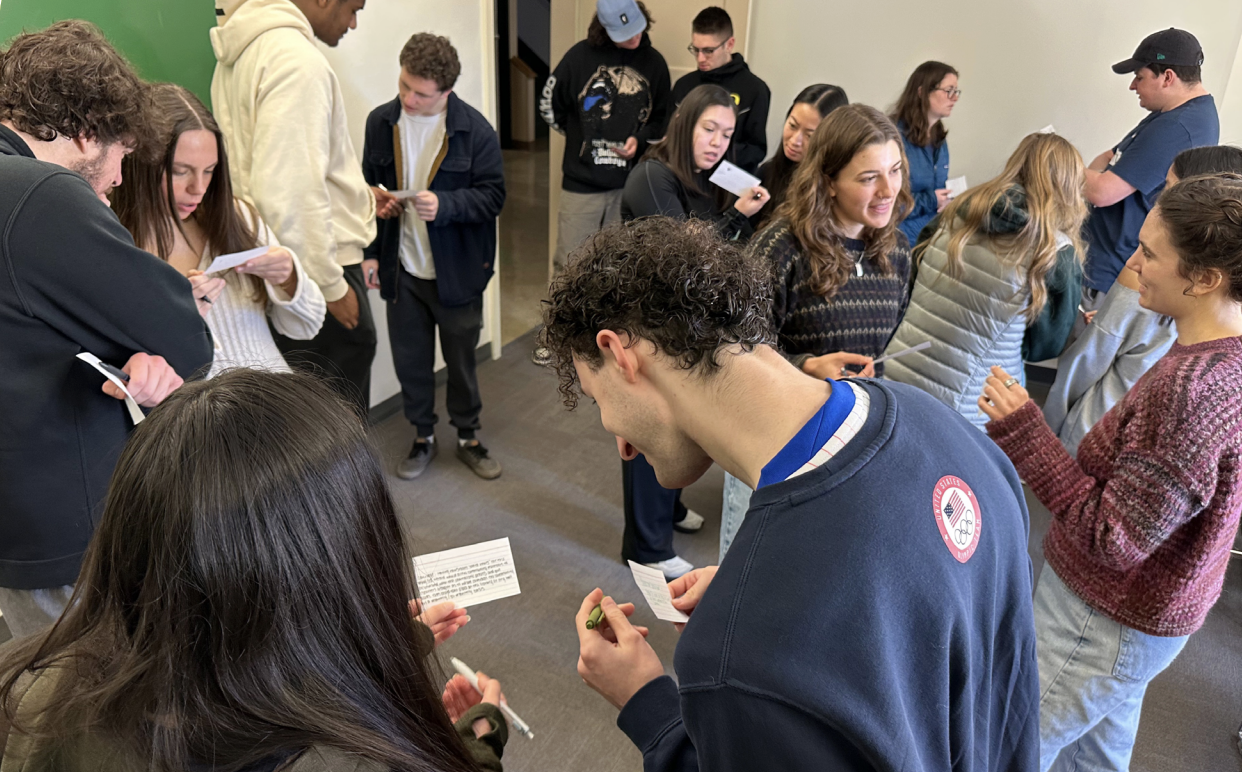
For the journalism students in Andrew DeVigal’s “Engaged Journalism” course at the University of Oregon, the assignment is anything but academic. Their classroom is the small, rural communities of Oregon, and their challenge is profound: How can journalism do more than just report on a community? How can it be more responsive to its needs? How can it help a community thrive? Particularly, they are exploring how local journalism can contribute to a broader civic infrastructure that fosters community connection, democratic participation, and resilience.
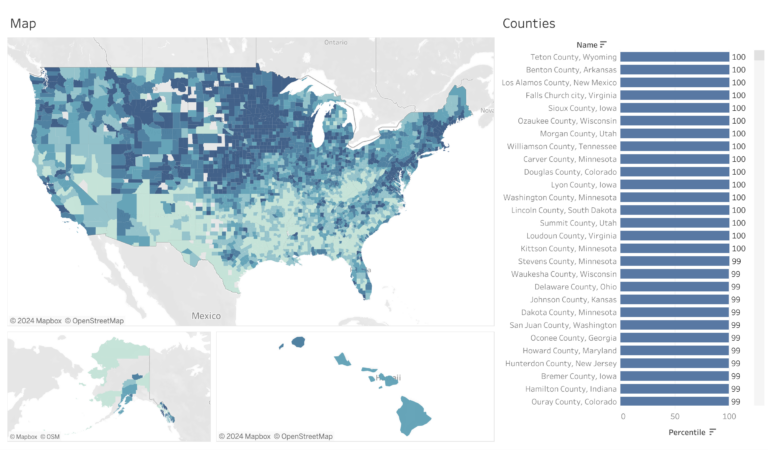
These questions led them to the Civic Information Index. They needed a way to move beyond assumptions and anecdotes and truly understand the civic health of the places they were trying to serve. The challenge, as Andrew puts it, “isn’t just what stories are told, but how, by whom, and whether the information provided can help communities thrive.”
“We’re not just documenting local concerns, we’re helping students and, slowly, community partners co-design civic information systems.”
A tool to help them see what’s hidden
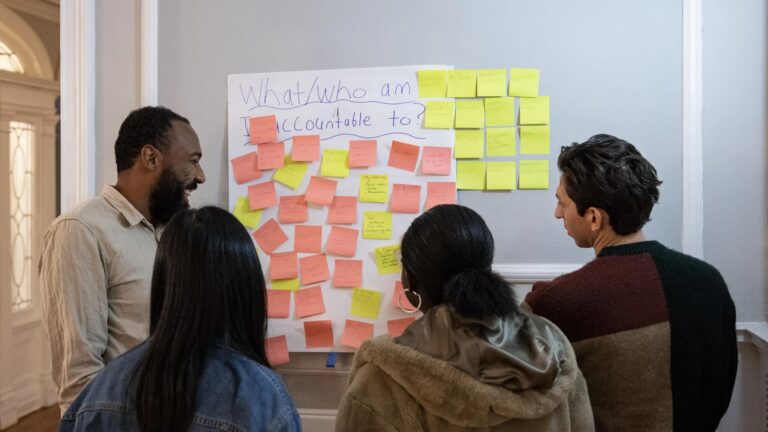
The students incorporated the Index directly into their fieldwork in the towns of Florence and Oakridge. It became a data-informed starting point for listening sessions, community surveys, and ultimately, their recommendations.
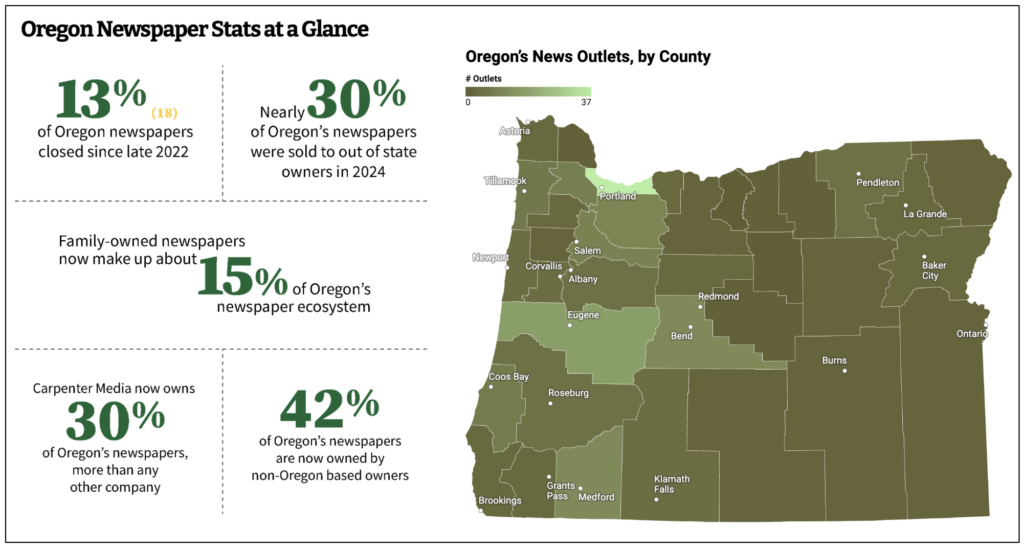
The Index didn’t just give them data; it gave them a new lens to see these communities in a context beyond just journalism, but as places with specific civic realities and challenges. A pivotal moment came while working in Florence, a coastal town in Lane County. While the county’s overall civic health score looked adequate, the Index’s granular data helped students see a different story.
“In Florence, for example, the Index helped us realize that Lane County’s overall information score masked fundamental inequities for residents on the coast,” Andrew notes. This discovery was critical. It challenged the students’ assumption that more information always leads to better outcomes. They saw firsthand how a community can be information-rich on paper but information-poor in practice for specific groups, like older adults or those without reliable broadband. The Index shed light on this gap.
A shift from reporting to rebuilding
The Index provided a “shared language” that helped them build stronger, more trusting partnerships with local libraries, organizations, and newsrooms.
The result was a fundamental shift in the course’s mission. “It’s shifted how we frame our class’s core goals. We’re not just documenting local concerns, we’re helping students and, slowly, community partners co-design civic information systems,” DeVigal said. “It reframes journalism as part of civic infrastructure. That shift is crucial for how we train journalists and how we collaborate with communities.” Students were no longer just documenting local concerns; they were using data to facilitate deeper conversations about solutions.
“It gives language to something they’ve already felt: that access to trustworthy, relevant, and timely information isn’t evenly distributed and that this gap has real consequences for civic life.”
Why it matters: training journalists and communities for a new era
By grounding their work in the Civic Information Index, Andrew DeVigal and his students are pioneering a new approach to journalism education. They are learning that the most impactful stories aren’t just the ones that are told, but the ones that empower a community to understand itself better.
The Index acted as a catalyst, proving that when data is paired with deep listening, journalism can become more than a product; it can be a vital part of building more equitable, responsive, and resilient communities from the ground up.
“When I present the Civic Information Index to students and Oregonians alike, the reaction is often one of recognition mixed with surprise,” said DeVigal. “On the one hand, it gives language to something they’ve already felt: that access to trustworthy, relevant, and timely information isn’t evenly distributed and that this gap has real consequences for civic life. On the other hand, seeing those dynamics broken down into measurable pillars, access, creation, distribution, use, and impact, helps both students and residents articulate what’s missing more concretely.”
We are deeply grateful to Andrew DeVigal and his class for generously sharing their story. You can learn more about their work exploring the information needs of communities in Oregon.