


Documented: Using Data to Drive Funding to Immigrant Communities in Need
Documented, a New York City-based non-profit newsroom serving immigrant communities, is leveraging the Civic Information Index to guide a new training program for peer outlets. Building Bridges: An Immigrant Media Training Program seeks to help newsrooms shift “from traditional immigration beat coverage to community-driven journalism that better serves immigrant communities.”
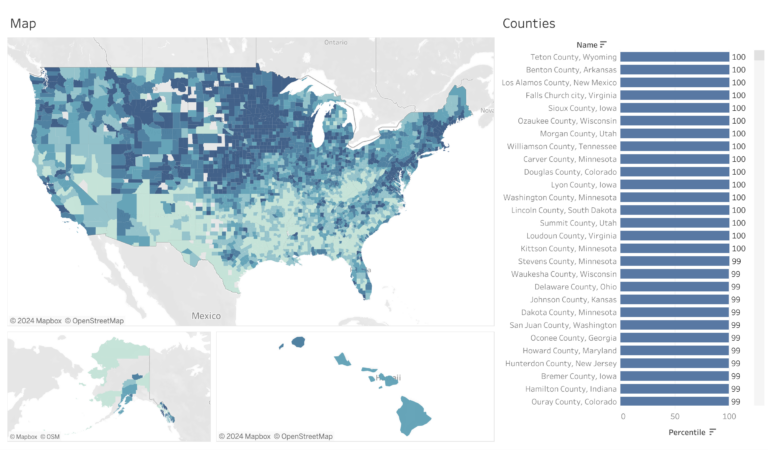
Program Manager Maria Arce has been using the Index to identify parts of the US that can most benefit from this training and investment. “We are cross-referencing this [Index] data with that of the counties with higher immigrant populations to identify the areas of greatest need,” she said. Arce is planning to use the Index throughout the life of the program to strengthen the connection between newsrooms and communities and create lasting engagement. “Showing that we have conducted a deep assessment of the communities also allows us to demonstrate that we genuinely care about them, building a bridge of trust,” she said.
“Showing that we have conducted a deep assessment of the communities also allows us to demonstrate that we genuinely care about them, building a bridge of trust.”
Allocating funding to counties with low civic health scores
Documented’s goal is to collaborate with 20 newsrooms over the next 3 years to launch editorial products to serve immigrants. Arce says the Index has led them to look at the South and southwestern parts of the US as part of their outreach. “We have found that, on average, the southern states have the poorest civic health and the highest number of immigrants,” Arce said.
This data-driven approach allows them to focus outreach on newsrooms serving underserved and less funded areas, where the training program can have a greater impact on immigrant communities’ access to information. “Being able to identify the exact places where local newsrooms can better serve immigrant communities is an invaluable tool for us, as it provides fact-based information for a fair and equitable selection process for our new training program,” Arce said.

Sharing is Caring: Grantees Will Explore the Index in the Training Program
Newsrooms and journalists have deep knowledge of the communities they serve, but there are some generalizations and assumptions that need to be confirmed with data to understand complex phenomena such as civic health. Arce says that the Index has helped them identify, address, and mitigate bias, understand the complexity of civic health, and avoid potential mistakes in serving communities.
As a community-driven newsroom, Documented is committed to using data to inform its strategies and plans to share this experience with its future grantees. They will integrate the Index into their new training program, teaching newsrooms how to use it to map and understand their communities and benefit from the data it provides.
“Being able to identify the exact places where local newsrooms can better serve immigrant communities is an invaluable tool for us, as it provides fact-based information for a fair and equitable selection process for our new training program.”
Why it Matters: Data for Better-Served Communities
For Documented, using the Index has meant having valuable data to allocate resources where they can generate the greatest impact for immigrant communities. This data also helps them connect with these communities in a more informed way, analyze complex contexts, and have meaningful conversations with the people they serve. In sum, the Index reinforces their mission to better serve immigrant communities across the U.S.
“The index is a tool that not only facilitates our work and broadens our knowledge of the communities but also helps us to engage in conversations with migrant communities to validate this data and open the door to further collaboration by presenting them with concrete facts.”
We are deeply grateful to Maria Arce and Documented for generously sharing their story. Learn more about their work.